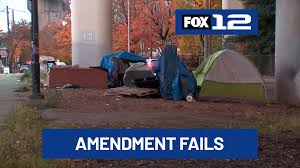
PORTLAND, Ore. (KPTV) — A tense Portland City Council meeting on Wednesday exposed deep divisions among city leaders as members voted down a proposal to cut funding for the city’s Impact Reduction Program (IRP) — the department responsible for clearing homeless camps and trash from public spaces.
The amendment, introduced by Councilors Mitch Green and Angelita Morillo, sought to redirect more than $4 million from the IRP and related departments toward food assistance, housing grants, and social service programs. The council ultimately rejected the proposal after hours of heated debate and emotional testimony from residents and city officials.
A Contentious Debate on City Priorities
“The behavior of the mayor and certain members of the city bureaucracy over recent weeks reveals some deeply troubling realities about the way this city is currently being run,” said Councilor Angelita Morillo, expressing frustration after the amendment’s failure.
Also Read
Councilor Green echoed the sentiment, calling the decision “disappointing” and arguing that the city should be reducing the number of homeless sweeps each year rather than expanding them.
“We don’t think this program is aligned with our values,” Green said. “It may not be the majority opinion, but it reflects a meaningful number of people who are deeply concerned about the direction Portland is heading with these sweeps.”
Mayor Pushes Back
Mayor Keith Wilson strongly opposed the amendment, claiming that the cuts would cripple cleanup operations and lead to unsafe conditions across the city.
“So this came to my desk as a surprise,” Wilson said. “I rallied my team and the administration over the weekend to assess the impacts.”
Morillo fired back, criticizing the mayor for not reaching out before the vote. “Your team could have called me — that’s what you have staff for,” she replied during the meeting.
Earlier in the week, Wilson warned that the proposed budget changes would leave four million pounds of biohazardous materials uncollected and force the layoff of 100 workers. Morillo, however, disputed those claims, insisting the amendment was not about eliminating jobs but about shifting the city’s strategy.
Public Divided Over Sweeps
Outside City Hall, protesters and community members gathered to voice opinions on both sides of the issue. Many neighborhood associations opposed the amendment, saying removing the IRP funding would harm public safety and cleanliness.
“Because of the Impact Reduction Program and the responsiveness of shelters and the mayor’s office, Portland is safer than it was six months ago,” said Shende Dimmer, a downtown resident.
Others defended the proposal, arguing that constant sweeps only worsen homelessness and fail to address root causes.
“If we continue to use the little funding we have to harass our homeless neighbors, that’s a true waste of resources,” said Haden Sommers, a supporter of the amendment.
“In Portland, a sweeps-first policy has led to multiple deaths,” added Lydia Keesling, another supporter. “We elected a new city council to try new things. The old way of underfunding social supports doesn’t work.”
Meanwhile, others like Talia Journey defended the IRP workers, calling them “rockstars” who connect unhoused people with services and keep public spaces safe. “Without the IRP, children will continue to step over dirty needles, and parks will become less accessible,” she said.
Councilors Clash, Walkouts Follow
As debate stretched late into the evening, tensions among councilors grew. Several members walked out before the vote in silent protest, signaling deeper fractures within the council.
“An absence is the same as a no vote,” said Councilor Eric Zimmerman, who voted against the amendment. “And I’m going to be a no vote all night long.”
Councilor Loretta Smith, who stayed for the full debate, also voted against the proposal but acknowledged parts of it were constructive.
“There were parts that were good,” Smith said, “but I could not stomach us losing the sweeps.” She added that her vote was intended as a message that the council must find a balanced path forward.
Calls for Collaboration
Despite being on opposite sides of the vote, both Smith and Green said they remain committed to working toward a long-term solution that combines accountability with compassion.
“What you’ve seen here is a couple of councilors planting a flag in the ground,” said Green. “We want to move in a different direction in how we address homelessness in this city, and I’ll continue working on that as long as I’m in office.”
Smith agreed that the debate, while heated, was productive. “I am hopeful,” she said. “We got some things off our chests. Now we need to sit down and have our staff craft something that will actually pass.”
More Amendments and the Road Ahead
Wednesday’s session also included three additional amendments proposed by Councilors Smith, Sameer Kanal, and Mitch Green, which offered alternative ways to adjust city funding.
-
Smith’s amendment sought to fully fund the IRP while setting aside more money for social programs.
-
Kanal and Green’s amendments aimed to preserve funding for programs such as GLITTER, which provides outreach and sanitation services, while scaling back some sweeps.
Though those measures were also tabled for future review, city leaders agreed that the discussions highlighted the need for a comprehensive homelessness strategy that addresses both safety and support.
As Portland continues to grapple with one of its most visible crises, the divide within the council underscores a broader question facing the city — how to balance compassion for the unhoused with maintaining public safety and cleanliness.
For now, the Impact Reduction Program remains fully funded, but the debate over its future — and the city’s approach to homelessness — is far from over.